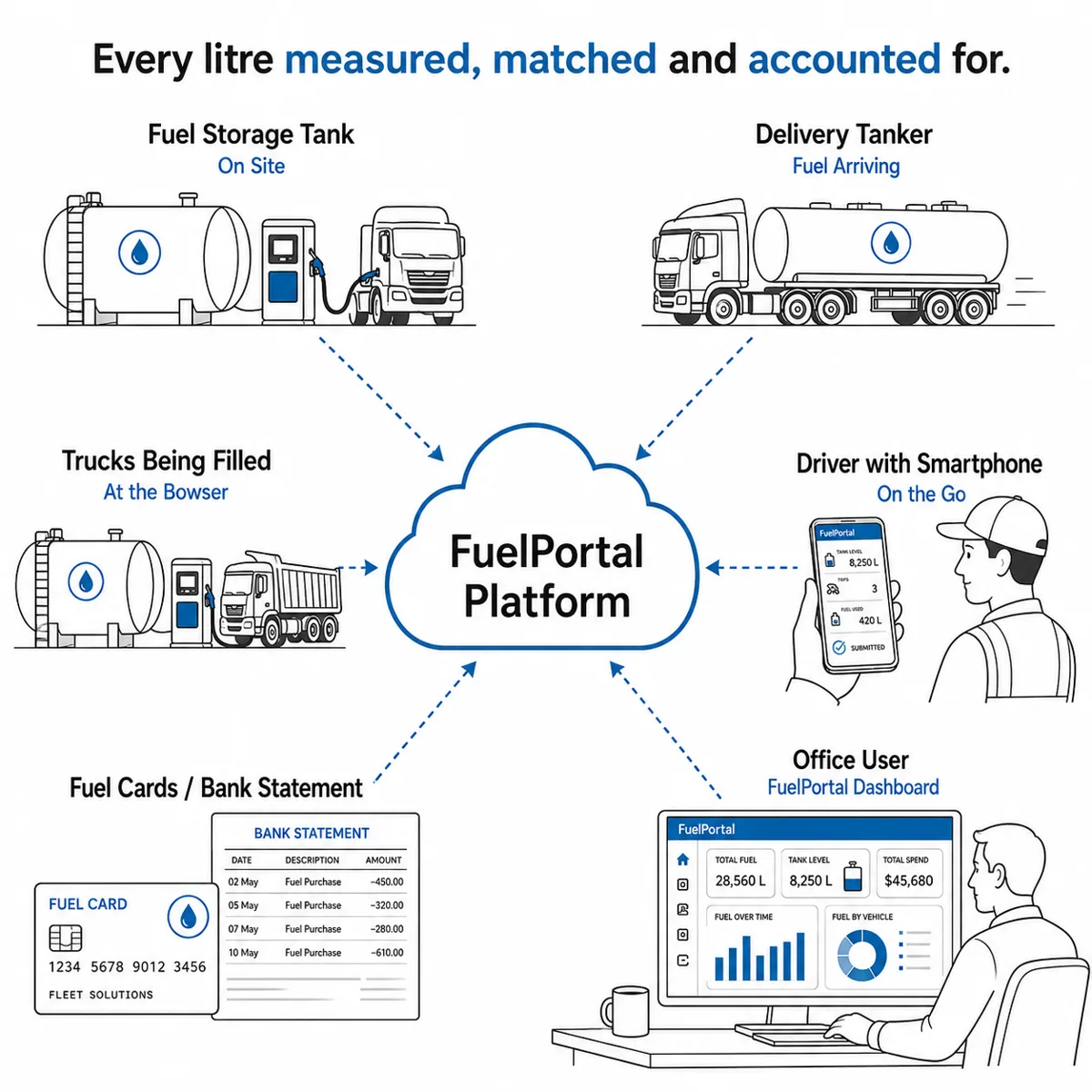
FuelPortal is a fuel management and fuel-theft-detection platform for truck fleets and fuel bowsers. It measures what actually entered and left every tank — calibrated sensors on trucks, flow monitors on bowsers — and checks both against what the engine’s CANbus says should have been burned. Three numbers that must agree. When they don’t, you get the event as it happens — with position, time, and litres — not a variance at month-end.
Ask about FuelPortal →
Fleet fuel theft follows patterns. Each one needs verified tank-level data to prove — that’s the gap FuelPortal closes.
Driver stops in a quiet area and siphons fuel into containers. Receipt data can’t see it — the fill was legitimate; it’s the drain hours later that matters. The tank sensor catches the level drop as it happens, with position and litres.
See it below ↓The receipt reads more litres than entered the tank, and the difference is split at the forecourt. FuelPortal records the measured litres of every fill — hold any receipt against it and the gap is visible, fill by fill.
See it below ↓Company fuel cards filling private vehicles. Every fill into a company tank is measured and time-stamped — a card transaction with no matching fill on any company vehicle has nowhere to hide.
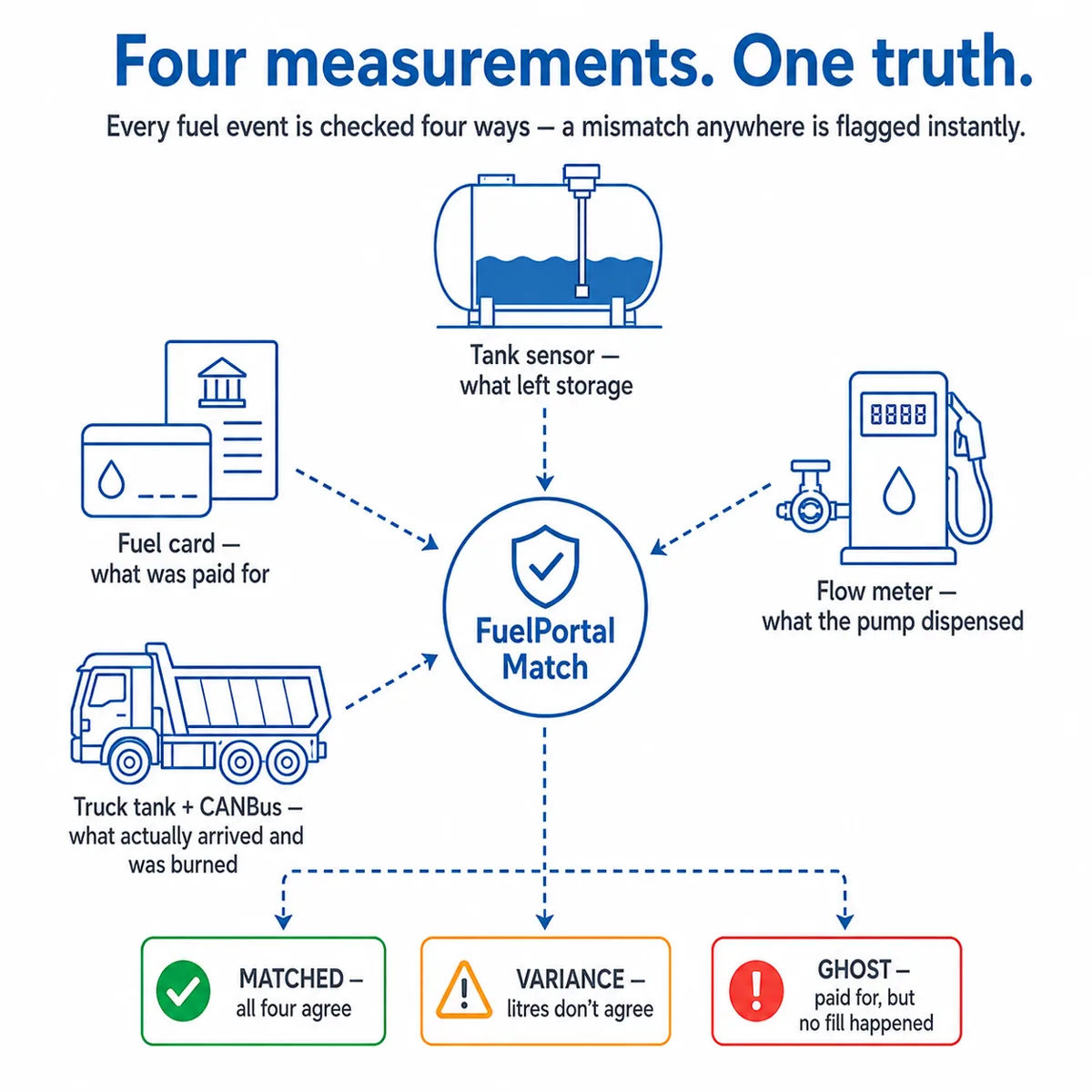
See it below ↓Four independent measurements of the same litre — what was paid for, what left storage, what the pump dispensed, what the truck received and burned. FuelPortal matches all four, live. A mismatch anywhere is an event, not a month-end mystery.
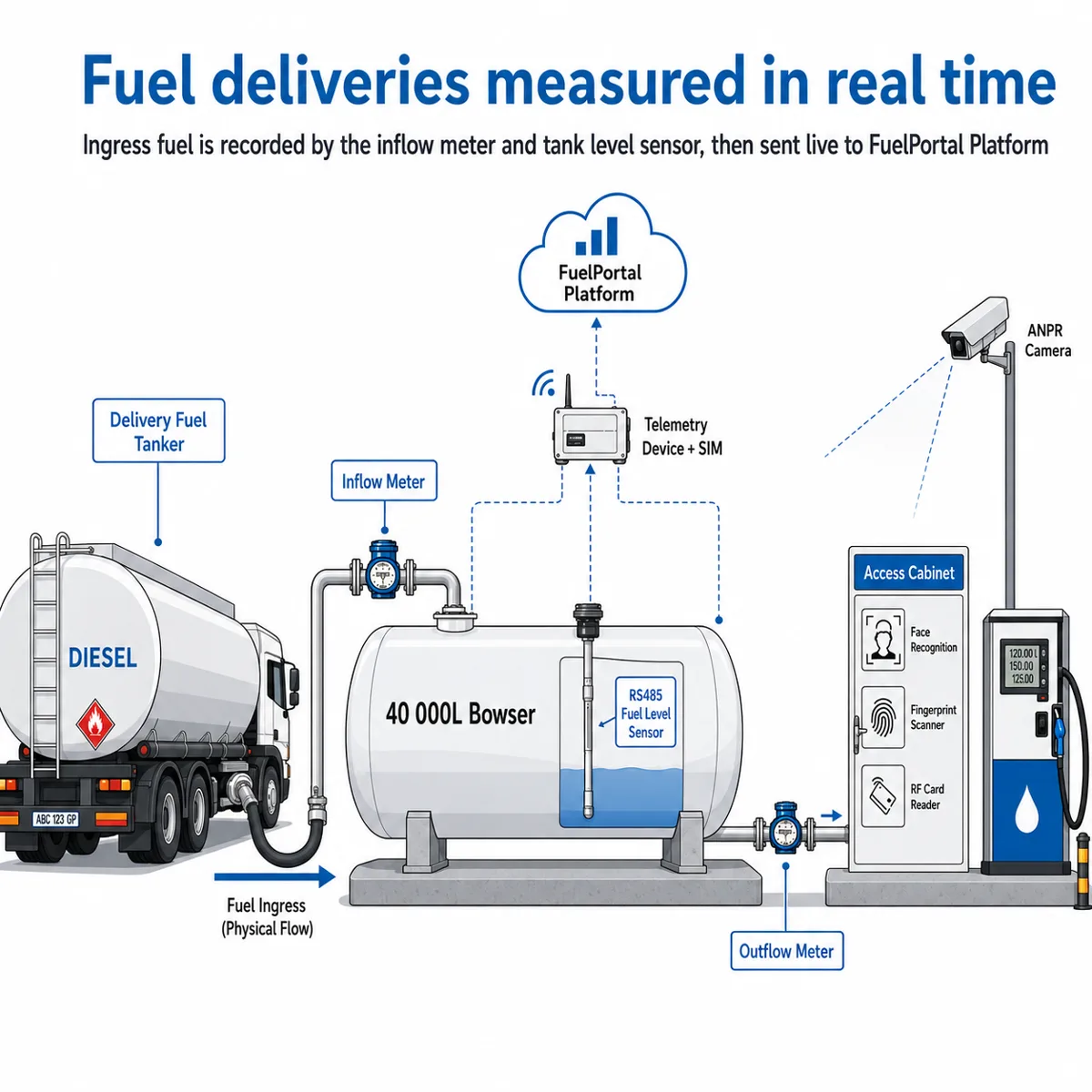
The bowser receives fuel from vendor tankers through an inflow meter, and the tank-level sensor confirms every litre that lands in storage. Short deliveries show up before the tanker leaves the yard.
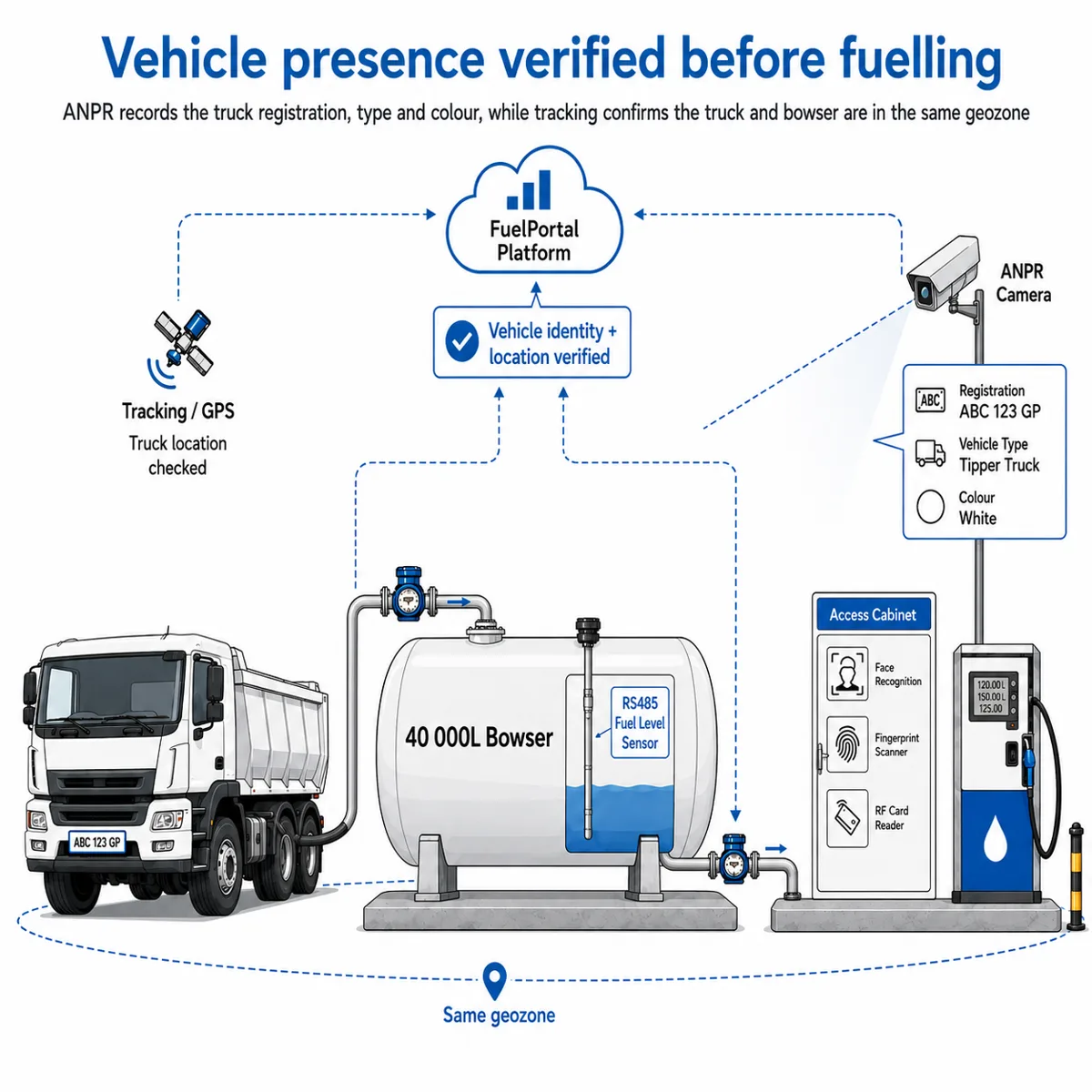
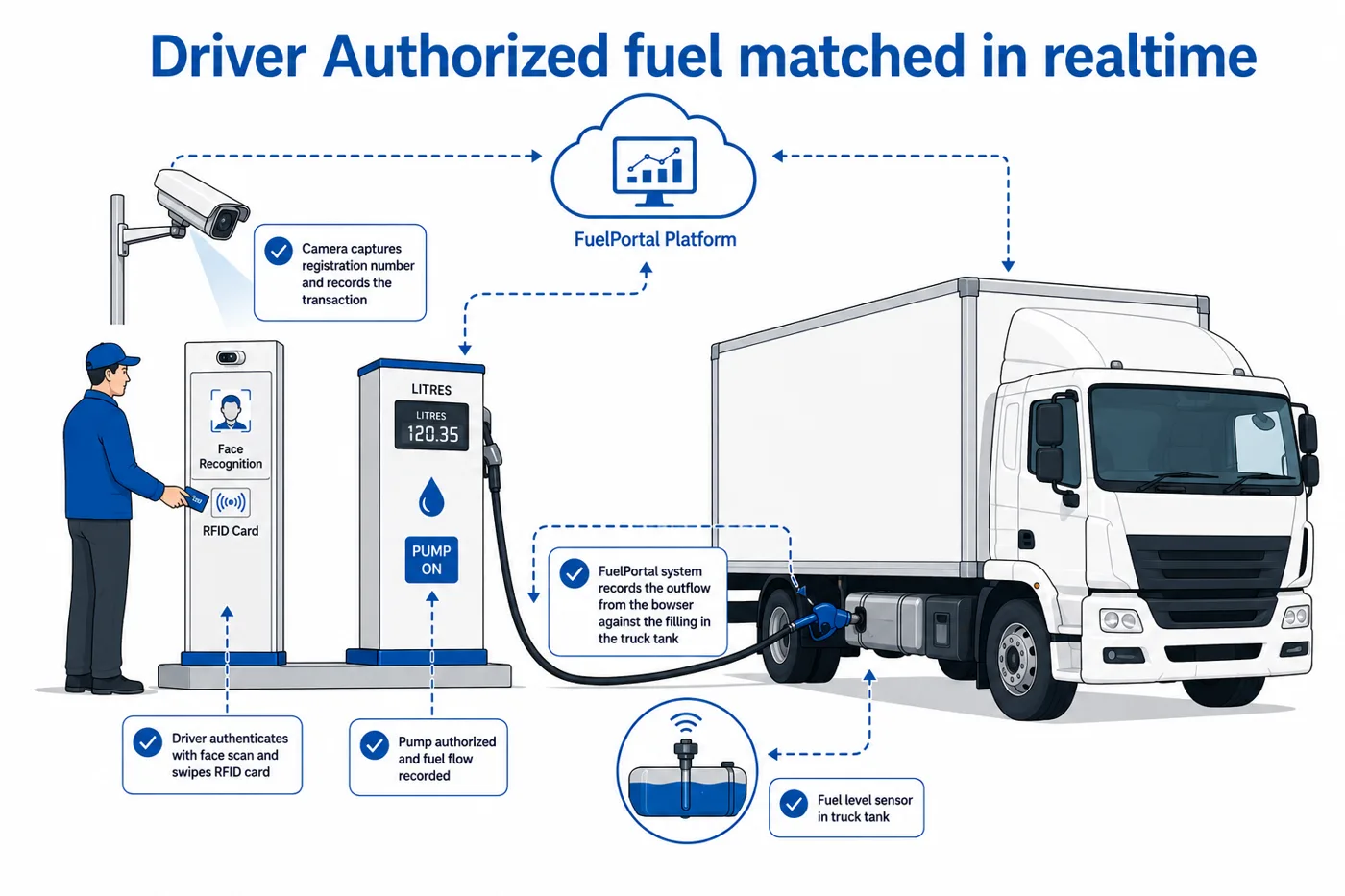
Face recognition or an RFID tag activates the pump, the camera records the vehicle, and the outflow litres must arrive in the truck’s tank — matched in real time, with the driver’s ID on every dispense.
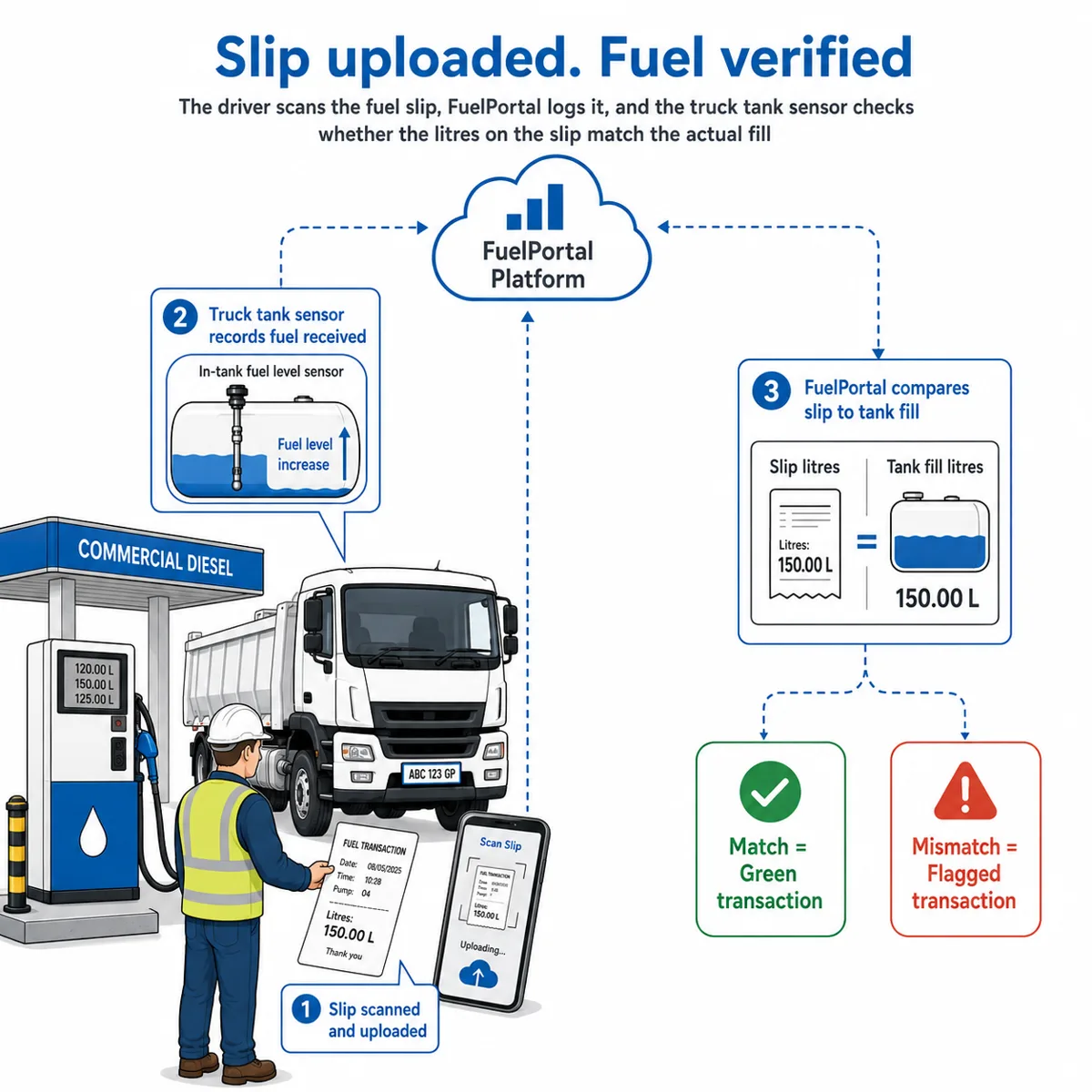
At a commercial filling station, the driver photographs the till slip in the FuelPortal app. The litres on the slip are read automatically and checked against the measured fill — no paper handed in, no retyping.
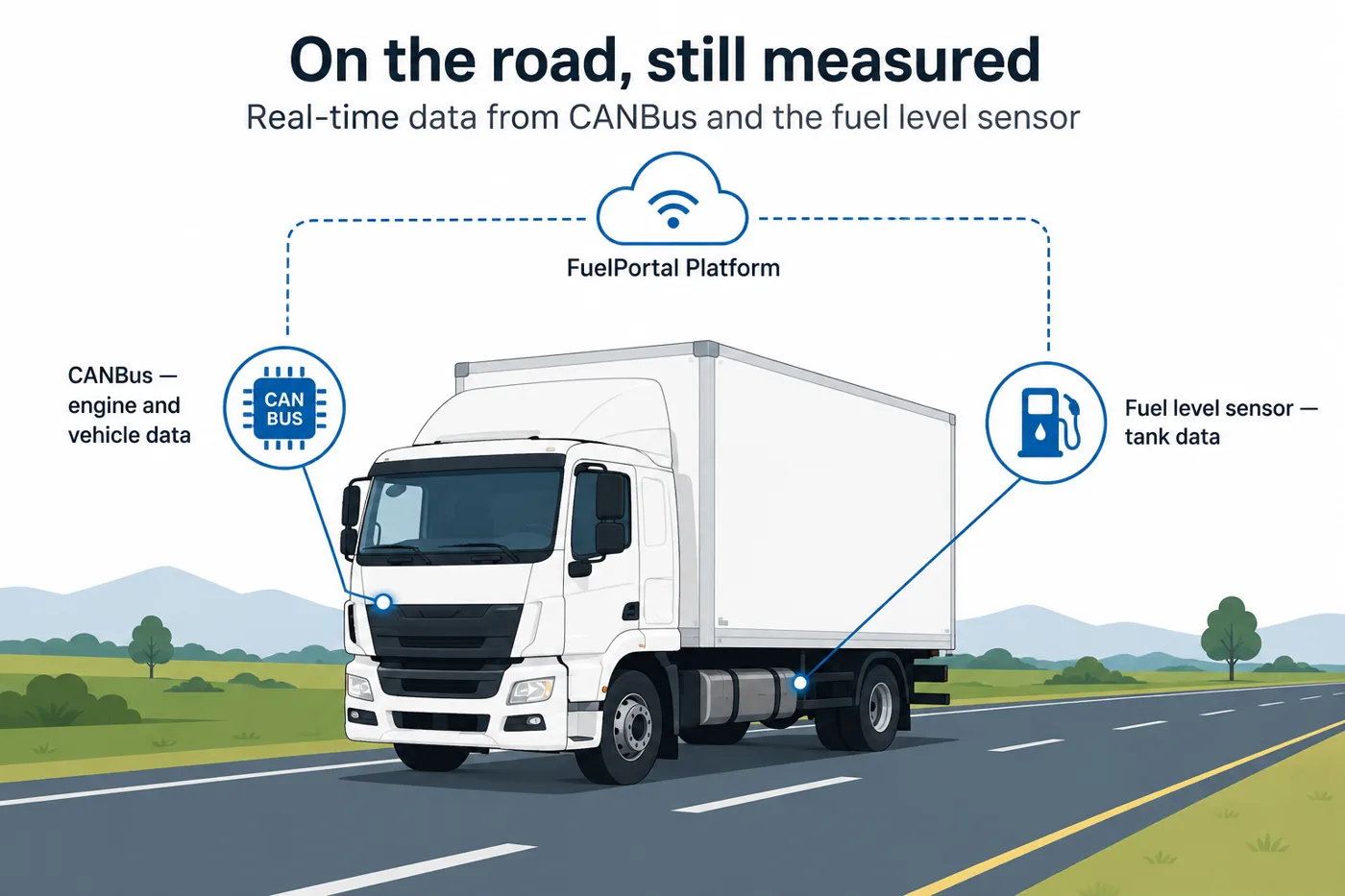
Between fills, CANBus engine data and the tank-level sensor stream live — consumption and drains are visible for the whole trip, with GPS position, timestamp and litres on every event.
From 1 April 2026, qualifying farming, forestry and mining operations can claim 100% of the SARS diesel refund — and claimants must keep detailed logbooks of diesel obtained, stored, dispensed and used, retained for five years and subject to SARS audit. FuelPortal records every litre received, dispensed and consumed — with timestamp and position — as a by-product of doing its job. Ask us about diesel-refund record-keeping for your operation.
Source: SARS diesel refund adjustment for onland users in farming, forestry and mining, effective 1 April 2026 (sars.gov.za).
FuelPortal is developed, installed and supported by GotYou Telematics — the authorised Teltonika and Galileosky distributor for Southern Africa. It runs on the trackers we distribute, and it comes with what fleets actually stay for: setup on a call, local RMA, and a dedicated support team that keeps your systems working. Cross-border SIMs keep vehicles reporting across Southern African borders.
Who qualifies, the storage and usage logbooks, five-year retention, and the 100% refund from 1 April 2026 — from the published rules.
Fuel theftSiphoning, inflated receipts, card sharing — how each works, and the measurement that catches it.
How it worksThe four measurements, driver ID on the pump, and how MATCHED, VARIANCE and GHOST are decided.
It runs on the Galileosky 10 and Teltonika FMC hardware GotYou distributes — if your fleet is already on one of those lines, FuelPortal integrates with the unit already on the vehicle.
Calibrated, temperature-compensated tank-level sensors on vehicles (analogue, digital, or CAN-sourced fuel data on supported vehicles) and fuel-flow monitors on bowsers.
Yes — bowser tank levels and truck readings sit on one screen, so depot-side losses show up alongside vehicle-side ones.
FuelPortal records every litre received, dispensed and consumed with timestamp and position — the purchase-to-use trail the refund regime's logbook requirements are built around. Talk to us about how that fits your claim process.
Yes — that’s the core of it. A bowser dispense must arrive in a truck tank; FuelPortal matches both sides live, with the variance in litres and the driver’s ID on the pump. An unmatched dispense is an event, not a month-end mystery.
Quote-based — every fleet's tank sizes, sensor fitment, and bowser setup differ. Describe your fleet and we come back with a number.
Tell us about the fleet and the bowsers — we’ll spec the sensors, the hardware, and the reports.